Case study | Logistics
A tailored and efficient solution with the PaperJet™
The LogisticCity in Nuremberg is the logistics center of the Hoffmann Group, which was put into operation at the end of 2021. As a market-leading partner for quality tools, the company provides products to more than 135,000 customers worldwide.
The increased output of the highly automated LogisticCity was the driving force behind a fundamental reorientation in the field of cushioning materials. To meet the new requirements of the packaging process, Papier Sprick supplied a demand-oriented and efficient solution with the PaperJet™ paper cushioning system.
From foil cushions to an efficient paper cushioning solution
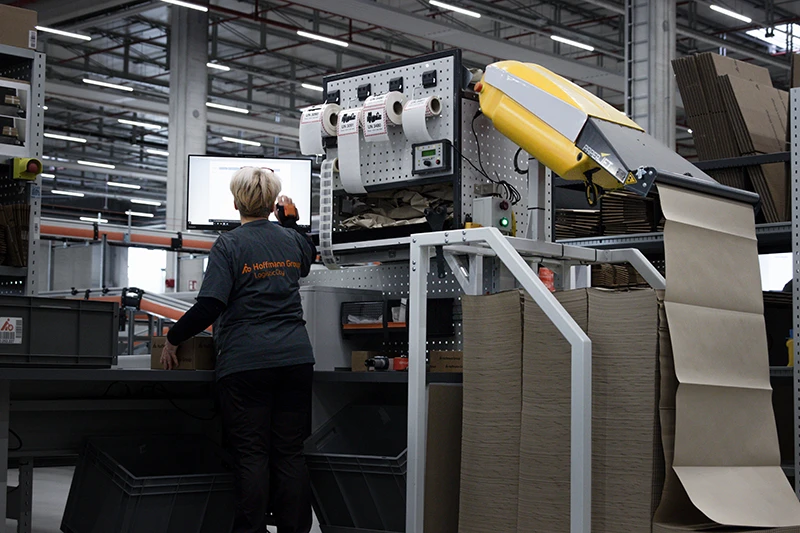
120,000 different catalog items, 80 packing stations and up to 40,000 packages per day – the LogisticCity presents complex demands for a packaging solution. Before the LogisticCity was built, the Hoffmann Group used foil cushions as padding material.
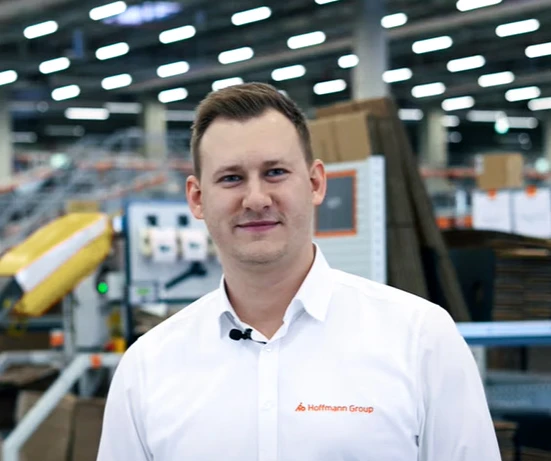
Several impulses moved the decision in the direction of recycled paper: The innovative concept of LogisticCity should be continued in the field of sustainability. “The desire for a more eco-friendly packaging material was also expressed by customers,” says junior project and process Manager Jonas Karg. In addition, regulatory requirements for the import of plastic foil to other countries influenced the decision-making process.
Paper and foil-based solutions from various manufacturers were put to the test in practice and evaluated by employees on the basis of feedback sheets, among other criteria. Papier Sprick entered the race with the PaperJet™, an extremely fast system for producing paper cushions.
The test clearly showed the advantages of the PaperJet™ over the foil solution and other paper-based materials. “Initial skepticism about the paper solution was quickly resolved. The employees favored the PaperJet™ and preferred to work at these workstations,” says Michael Scholz, Team Leader Logistics Small Packaging.
Jörg Kaschny, Papier Sprick’s sales manager, was there from the start of the test phase to support and advise. “This reliable service was very valuable for us,” says Karg. “With Mr. Kaschny, we have a central contact who takes care of all matters.” The test setups were accompanied by packing training sessions. Here, Kaschny informed the employees about cushioning and packaging options, carton sizes and the workflow.
Short set-up time, versatile cushioning
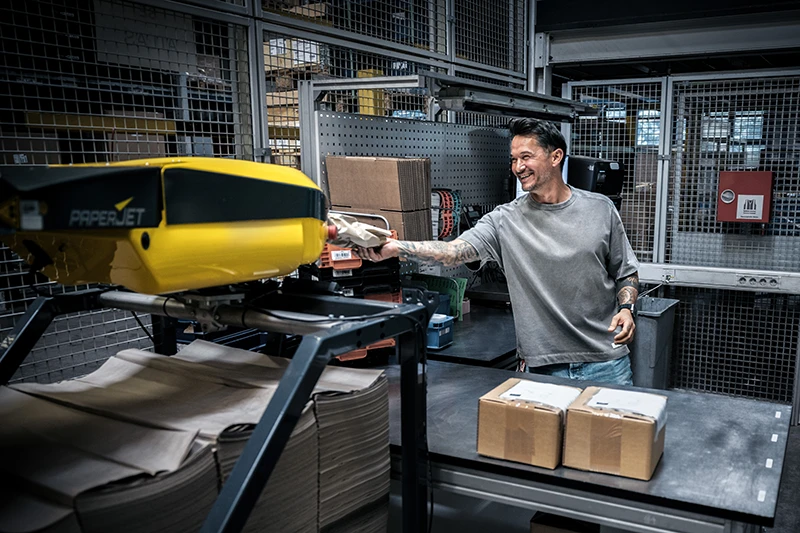
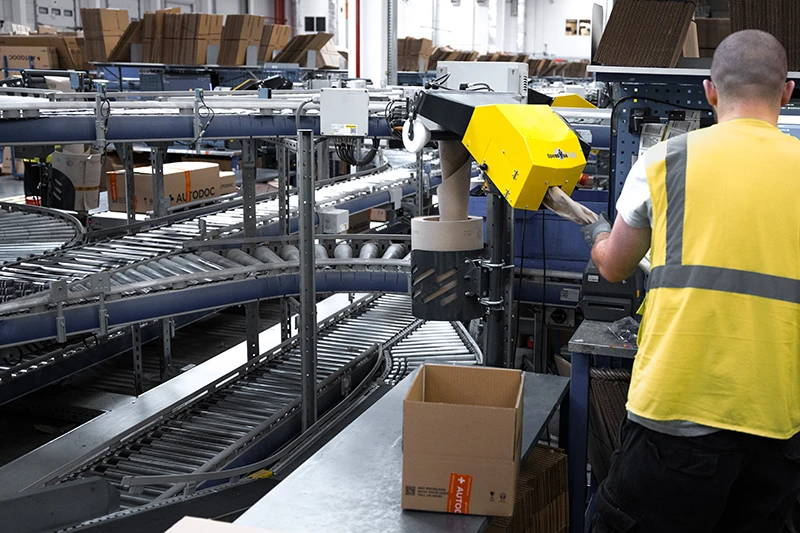
By integrating the PaperJet™, the workflow was optimized as a whole. Today, a total of 80 machines are placed in both the small and large packaging departments. In the small packaging department, the PaperJet™ produces cushions in a dispenser at the packing table, while in the large packaging department, the employees remove the cushions directly from the machine. The central pre-production of foil pads and subsequent distribution to the packing stations has thus been replaced. “Packing is now much more flexible than before,” says Scholz. The freely selectable cushion lengths make it possible to fill voids with a precise fit.
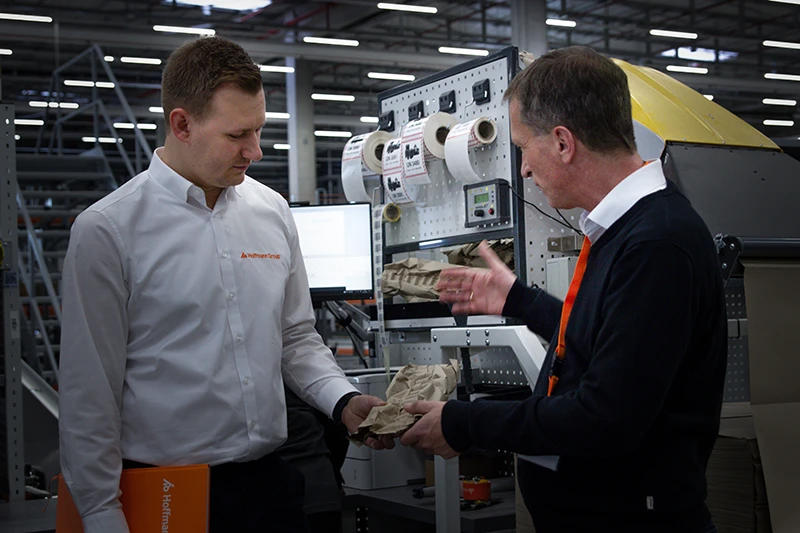
“The short set-up time is a crucial point which makes the PaperJet™ so attractive. We now switch the material pallet every 3 to 4 weeks per workstation. This means a considerable time saving compared to the previous 1 to 2 roll changes of foil material per day,” says Karg. This is made possible by the ComPackt™ endless pallet in a space-saving fanfold which offers 7,600 meters of recycled paper on a small footprint.
The packaging solution as a circular economy
The Hoffmann Group pursues the idea of sustainability not only in its choice of cushioning material. “We generate 600 tons of paper waste annually, the majority from incoming goods,” explains Karg. Previously, the waste was collected in several presses, which were then picked up separately for disposal. Now the waste paper is pressed in the company’s own baling press. Papier Sprick can use the bales produced in this way to manufacture more paper for the PaperJets™ used in the LogisticCity in the course of regular material deliveries at its own paper mill in Diemelstadt. These bales can be used by Papier Sprick to produce more paper for the PaperJets™ used in the LogisticCity. This is done at the Papier Sprick paper mill in Diemelstadt and provided through the regular material deliveries.
Key takeaways
- PaperJet™ improves packaging efficiency
- Recycled paper replaces plastic cushioning
- Reliable protection for shipped products
- Faster packing with on-demand paper cushioning
- Sustainable packaging for high-volume logistics
- Customized solution from Papier Sprick
Frequently Asked Questions About Packaging Process Optimization
How can paper cushioning improve packaging efficiency?
Paper cushioning produced directly at the packing station eliminates the need to store pre-made packaging materials. This streamlines workflows, reduces handling time and helps speed up packing processes.
How can I replace plastic air cushions with paper?
Paper cushioning systems like PaperJet™ replace conventional plastic air cushions with protective cushions made from recycled paper. This reduces plastic usage while maintaining reliable product protection.
Is paper cushioning suitable for high-volume shipping?
Yes. Automated paper cushioning systems are designed for medium and high shipping volumes, producing cushioning material on demand to support fast and efficient packing operations.
How does paper cushioning protect products during transport?
Paper cushioning absorbs shocks, fills empty spaces and stabilizes products inside the shipping box. This helps reduce movement during transit and lowers the risk of shipping damage.
What are the benefits of an automated paper cushioning system?
Automated systems improve packing speed, reduce material handling, optimize workspace organization and provide consistent protective packaging for every shipment.
How do I choose the right paper cushioning solution?
The right solution depends on your products, shipping volumes and packaging process. A packaging analysis helps determine which cushioning system best fits your operational requirements.
More case studies